
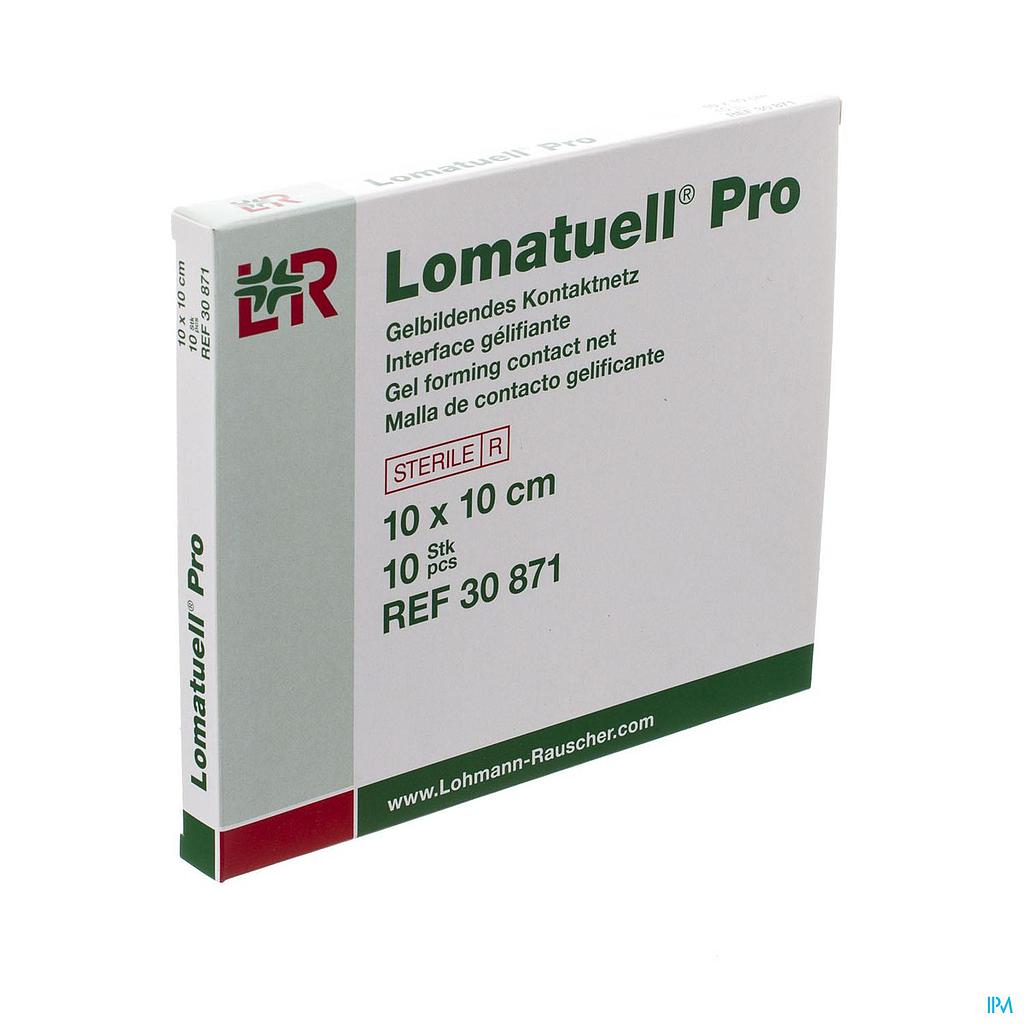


Lomatuell Pro gel interface
The Lomatuell Pro gel interface is a polyester tulle dressing impregnated with vaseline and hydrocolloids. Its flexible texture reduces adhesion to the wound, facilitating dressing changes. Suitable for chronic wounds (ulcers, pressure sores) and acute wounds (burns, cuts, dermabrasions), it effectively supports all healing phases. Box of 10 pieces.
| Brand: Lohmann & Rauscher |

Référence |
30871 |
Associated categories: Lomatuell Pro gel interface
Features:
- Gel interface for wound care
- Tulle mesh composed of polyester fibres
- Impregnation based on petroleum jelly and hydrocolloids
- Flexible and supple texture, conforming to wound contours
- Reduces the risk of adhesion to the wound and edges upon removal
- Promotes an environment conducive to healing
- Suitable for use during all exudation phases
- Indicated for chronic wounds: venous leg ulcers, diabetic foot ulcers, pressure ulcers
- Suitable for acute wounds: lacerations, cuts, dermabrasions
- Suitable for second-degree burns
- Use possible on post-surgical wounds and wounds in secondary healing phase
- Compatible with graft donor sites
- Can be combined with negative pressure therapy as a wound interface
- Packaging: box of 10 pieces
Often purchased together
Gentle removal, peaceful healing.
Frequently asked questions
Can Lomatuell Pro be used on a heavily weeping wound?
Yes, this gel interface is designed for use during all exudation phases, whether wounds are lightly or heavily exudative. The hydrocolloids present in the impregnation help manage moisture at the wound site.
How does Lomatuell Pro prevent sticking to the wound?
The impregnation combining petroleum jelly and hydrocolloids creates a protective barrier that prevents the dressing from adhering to the wound bed and its edges. This allows atraumatic removal and reduces discomfort during dressing changes.
Is Lomatuell Pro compatible with negative pressure therapy (NPT)?
Yes, this interface can be used in association with a negative pressure therapy system. It then serves as a protective layer between the wound and the foam or NPT dressing, facilitating subsequent changes.