
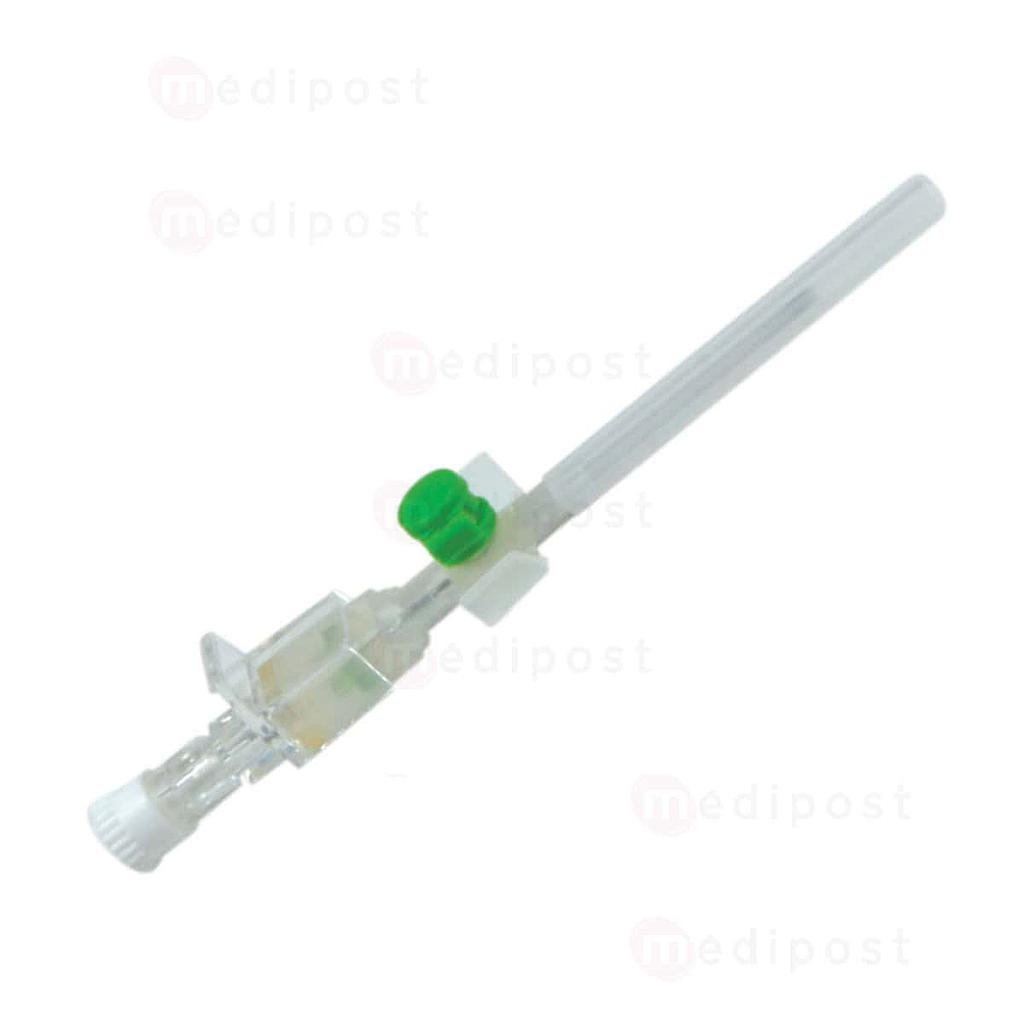


Delta Selfsafe Secured Catheter + Injection Site
The Delta Selfsafe catheter combines safety and performance for prolonged venous access. Made of flexible and biocompatible polyurethane, it incorporates a passive protection device against accidental needle sticks. Its atraumatic Back-Cut needle tip facilitates insertion, while its radiopaque bands ensure optimal radiological control. Sterile, available in 8 gauges.
Référence |
3763122 |
Associated categories: Injection and infusion equipment > Catheters > Delta Selfsafe secured catheter + injection port
Features:
- Secured peripheral intravenous catheter with injection port
- Automatic passive needlestick protection device
- Flexible polyurethane ensuring excellent biocompatibility
- Designed for prolonged venous placement
- Integrated stabilization wings for optimal fixation
- Atraumatic "Back-Cut" tip for smooth insertion
- Transparent visualization chamber for blood reflux confirmation
- 3 radiopaque bands for imaging localization
- Thin wall allowing optimal flow rate
- Removable microscreen filter
- Integrated injection port for medication administration
- Sterile under individual packaging
- 8 sizes available: 14G to 24G
- Standardized colour code by gauge
- Sold individually, by box of 50 or carton of 200
Often bought together
A catheter that combines caregiver safety and patient comfort, even during prolonged placements.
Frequently asked questions
What is the Selfsafe system on this catheter?
The Selfsafe system is a passive protection device that activates automatically upon needle withdrawal. It protects the caregiver against accidental needlesticks without requiring additional manipulation.
Why choose a polyurethane catheter rather than Teflon?
Polyurethane offers better biocompatibility and greater flexibility than Teflon. These properties reduce venous irritation and allow for longer catheter placement, particularly suited to treatments lasting several days.
What is the purpose of the radiopaque bands on the catheter?
The three radiopaque bands allow precise visualization of catheter position during radiological examinations or under fluoroscopy. This facilitates checking correct positioning without removing the device.