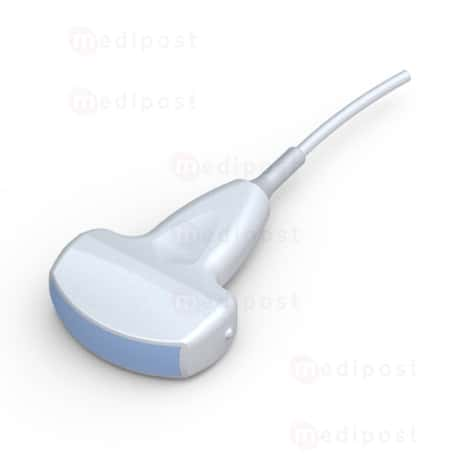
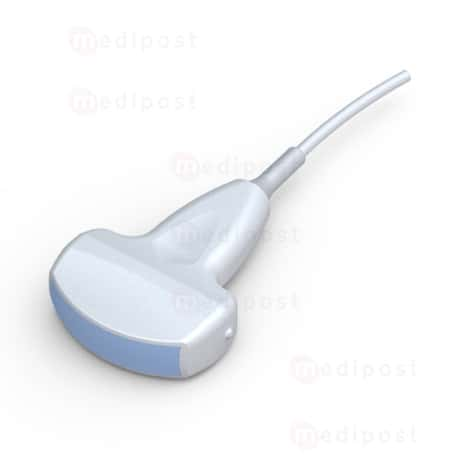

Convex probe for Edan DUS 60 ultrasound system
The convex probe for Edan DUS 60 ultrasound machine offers diagnostic versatility with its multiple frequencies (2.5 to 5.4 MHz). This medical imaging accessory is specially designed for abdominal, obstetric, gynecologic and urologic examinations, allowing in-depth ultrasound exploration of internal organs.
| Brand: Edan |

Référence |
0201210683 |
Associated categories: General diagnostic medical equipment > Ultrasound scanners > Convex probe for Edan DUS 60 ultrasound scanner
Features:
- Convex ultrasound probe compatible with Edan DUS 60 scanner
- Designed for abdominal, obstetric, gynecological and urological ultrasound examinations
- Multiple frequencies: 2.5 / 3.5 / 4.5 / H5.0 / H5.4 MHz
- Convex format adapted for exploration of deep organs
- Versatility of use thanks to extended frequency range
- Exclusive compatibility with Edan DUS 60 model
A versatile probe that meets daily needs of abdominal and pelvic imaging.
Frequently asked questions
Is this convex probe compatible with other Edan ultrasound scanners?
No, this probe is specifically designed to work with the Edan DUS 60 ultrasound scanner. It is not compatible with other models in the Edan range.
What types of examinations can be performed with a convex probe?
The convex probe is particularly suited to abdominal, obstetric, gynecological and urological ultrasound examinations. Its shape allows optimal exploration of deep body structures.
What do the different frequencies of the probe correspond to?
Low frequencies (2.5-3.5 MHz) allow deeper penetration for overweight patients or deep organs. Higher frequencies (4.5-5.4 MHz) provide better image resolution for more superficial structures.