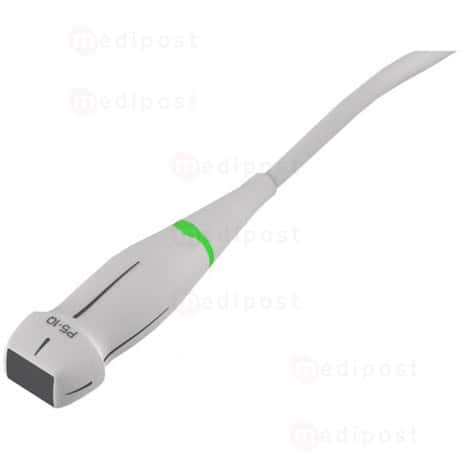
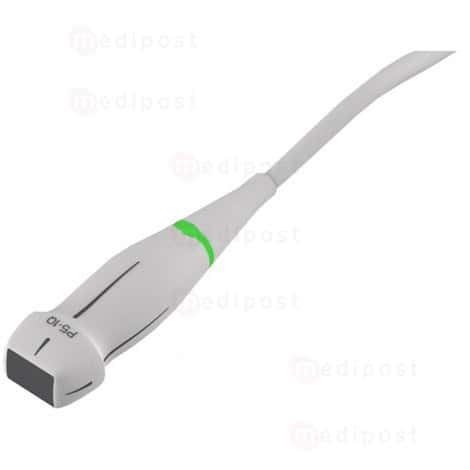

Phased cardiac probe P5-1Q, 1~5MHz for AX3/LX3 ultrasound system
Edan P5-1Q cardiac phased probe compatible with AX3 and LX3 ultrasound systems. This ultrasound probe offers a frequency range of 1 to 5 MHz, a field of view of 90° and a display depth of 30 cm. Equipped with pulsed and continuous Doppler, it allows abdominal imaging and adult and pediatric cardiac screening.
| Brand: Edan |

Référence |
0201213916011 |
Associated categories: General diagnostic medical equipment > Ultrasound machines > Cardiac phased array probe P5-1Q, 1~5Mhz for AX3/LX3 ultrasound machine
Features:
- Cardiac phased array probe for Edan AX3 and LX3 ultrasound machines
- Frequency range: 1 to 5 MHz
- Selectable harmonic and fundamental frequencies
- Pulsed Doppler with maximum velocity of 10 m/s
- Continuous Doppler with maximum velocity of 75 m/s
- Field of view: 90°
- Display depth: 30 cm
- Adult and pediatric cardiac imaging
- Abdominal imaging
- Cable length: 2 meters
- Manufacturer reference: P5-1Q
A versatile probe that meets the requirements of daily echocardiography, from infants to adults.
Frequently asked questions
Is the P5-1Q probe compatible with all Edan ultrasound machines?
No, the P5-1Q probe is specifically designed for Edan AX3 and LX3 ultrasound machines. It is not compatible with other models in the Edan range.
Can this probe be used for pediatric echocardiography?
Yes, the P5-1Q probe supports cardiac screening in both children and adults. Its frequency range of 1 to 5 MHz allows the examination to be adapted according to the patient's morphology.
What is the difference between pulsed Doppler and continuous Doppler on this probe?
Pulsed Doppler measures flow at a precise depth with a maximum velocity of 10 m/s. Continuous Doppler allows measurement of higher velocities, up to 75 m/s, which is essential for evaluating severe valvular stenosis.