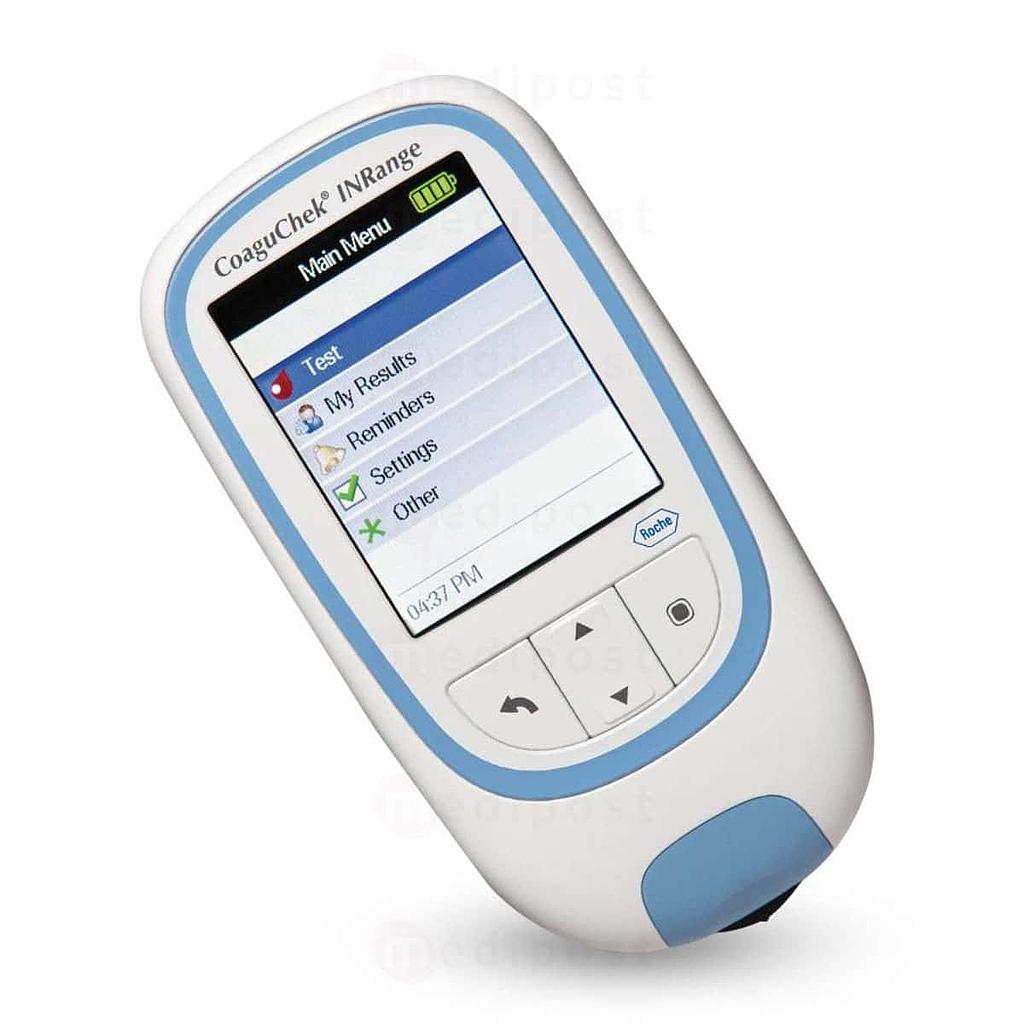
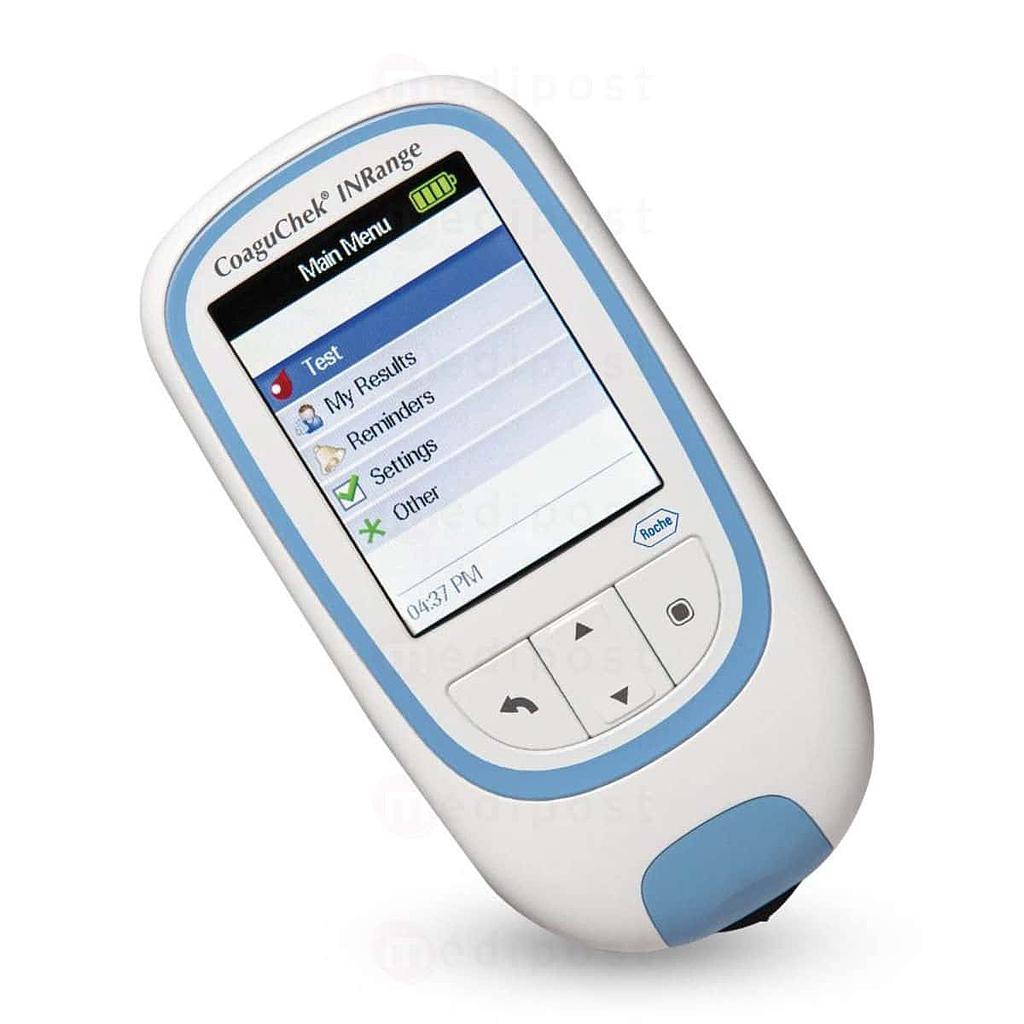
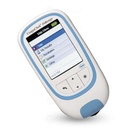
Coagucheck INRange Kit
Innovative self-measurement reader allowing the patient to measure INR (PT) anywhere, anytime very easily for optimal monitoring of anticoagulant therapy.
Numerous studies conducted internationally have shown that the effects of self-management care are positive both in terms of patient health and cost-effectiveness.
| Brand: Roche |

Référence |
07404379016 |
Associated categories: Diagnostic testing equipment > Prothrombin time > Coagucheck INRange Kit
Features:
- Portable coagulation analyzer
- Allows you to measure your INR yourself in a few seconds using a capillary blood sample and reactive test strips.
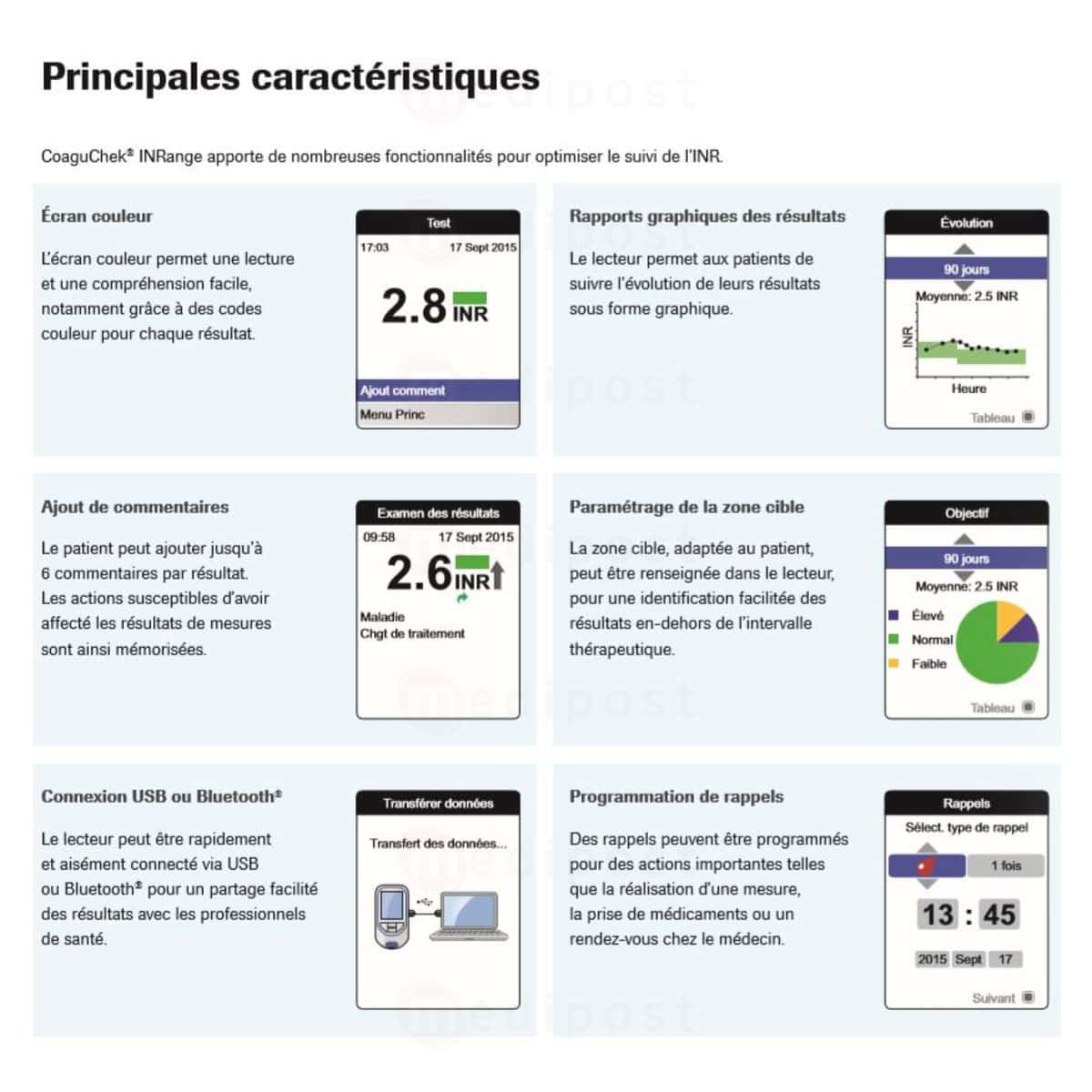
- Enables more frequent self-testing to improve time spent in your target range
- Simple to use and delivers immediate results
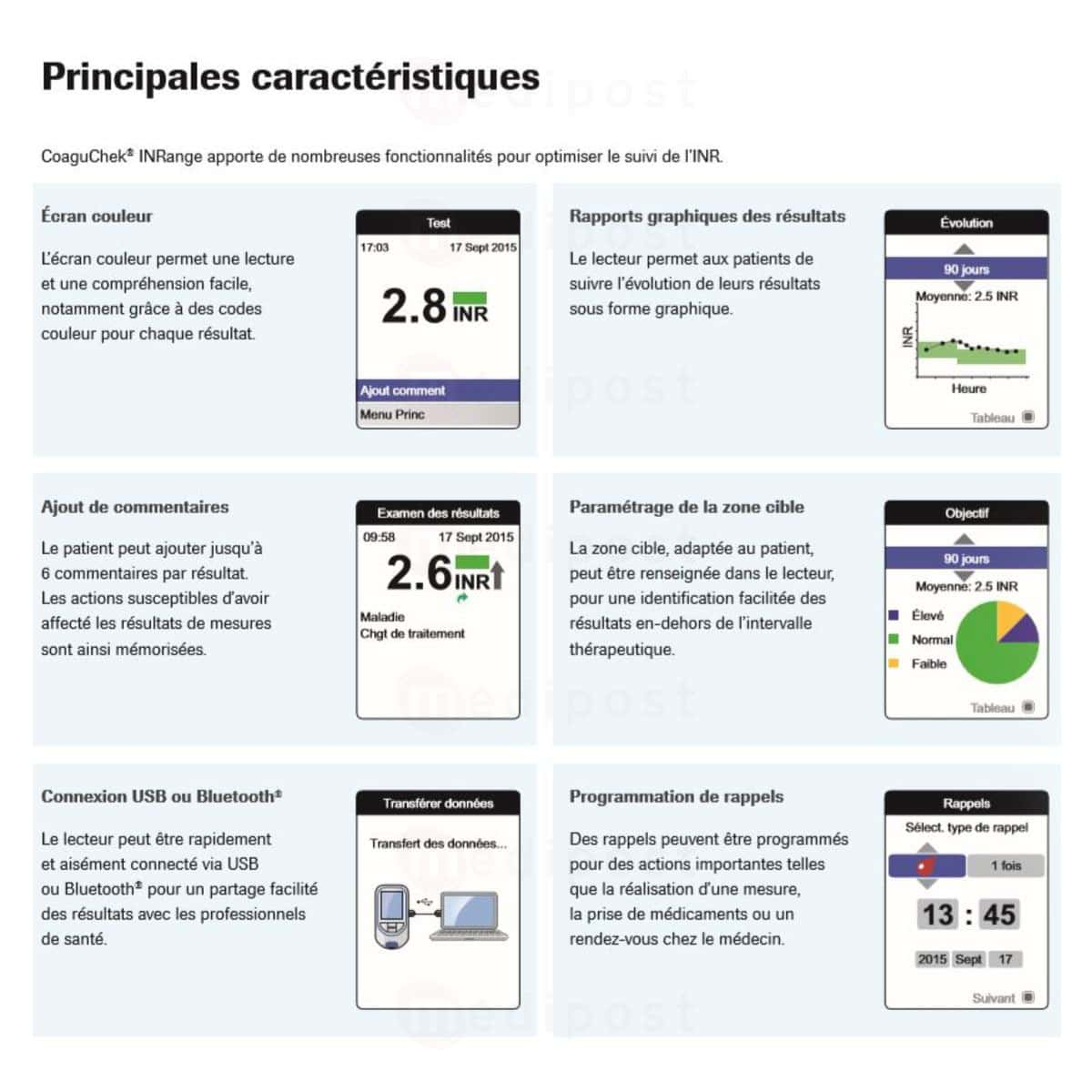
- USB and Bluetooth(r) connectivity for easy sharing of results with your doctor.
- Reminder function
- Color display and color coding of values (green=normal, yellow=deficit, blue=excess)
- Memory for 400 measurements (date, time and comments)
- Up to 6 comments per measurement to indicate, for example, special conditions etc.
- Dimensions: 14.5 x 7.5 x 3 cm
- Weight: 135 g (without battery)
- The device is configurable in several languages: French, English, Dutch, German, Spanish and Portuguese.
- Requires the use of CoaguChek XS - PT Test strips, not included in this kit.
Often bought together
Measurement ranges of the coagulation analyzer:
- %Quick: 120% - 5%
- Sec: 9.6 - 96
- INR: 0.8 - 8.0
Usage:
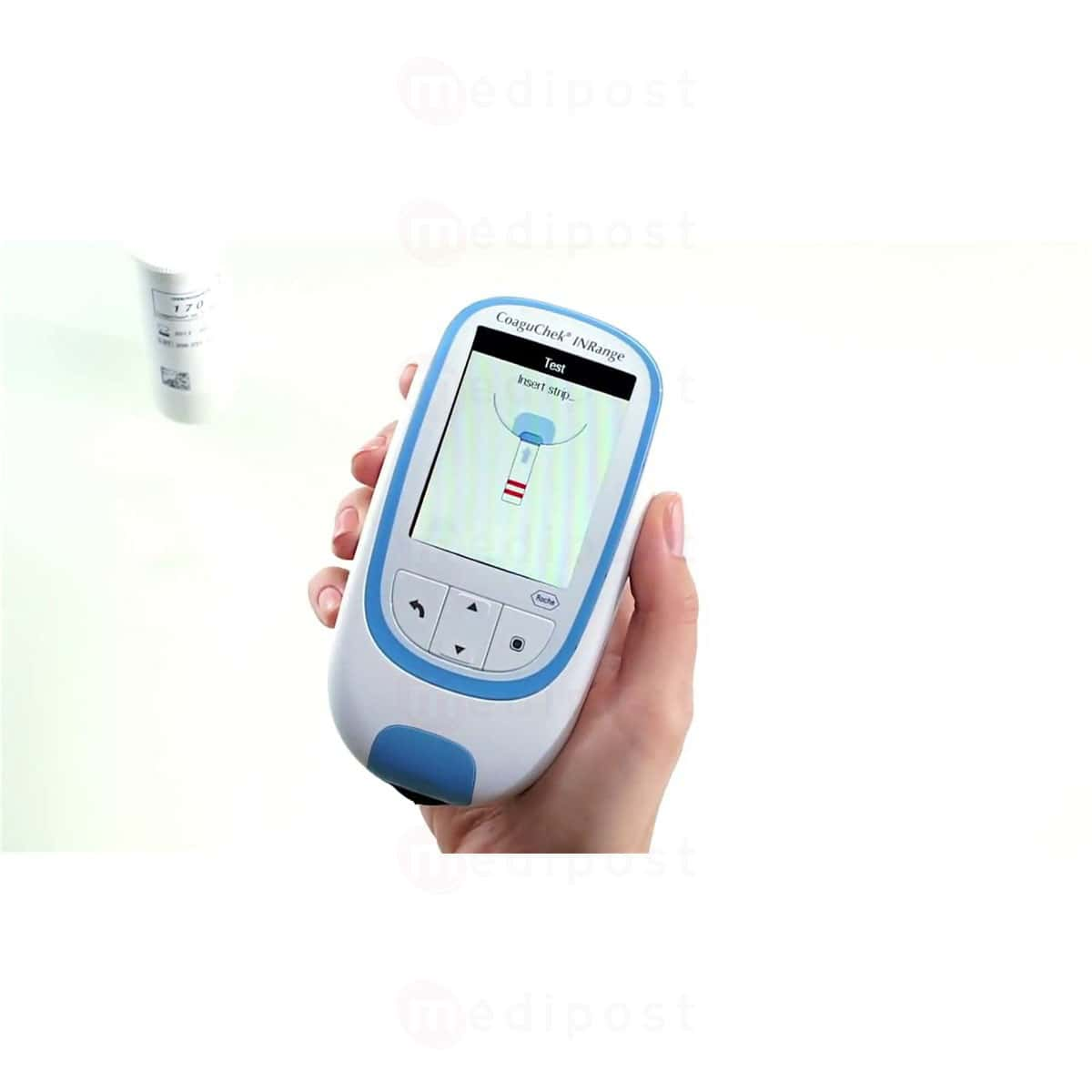
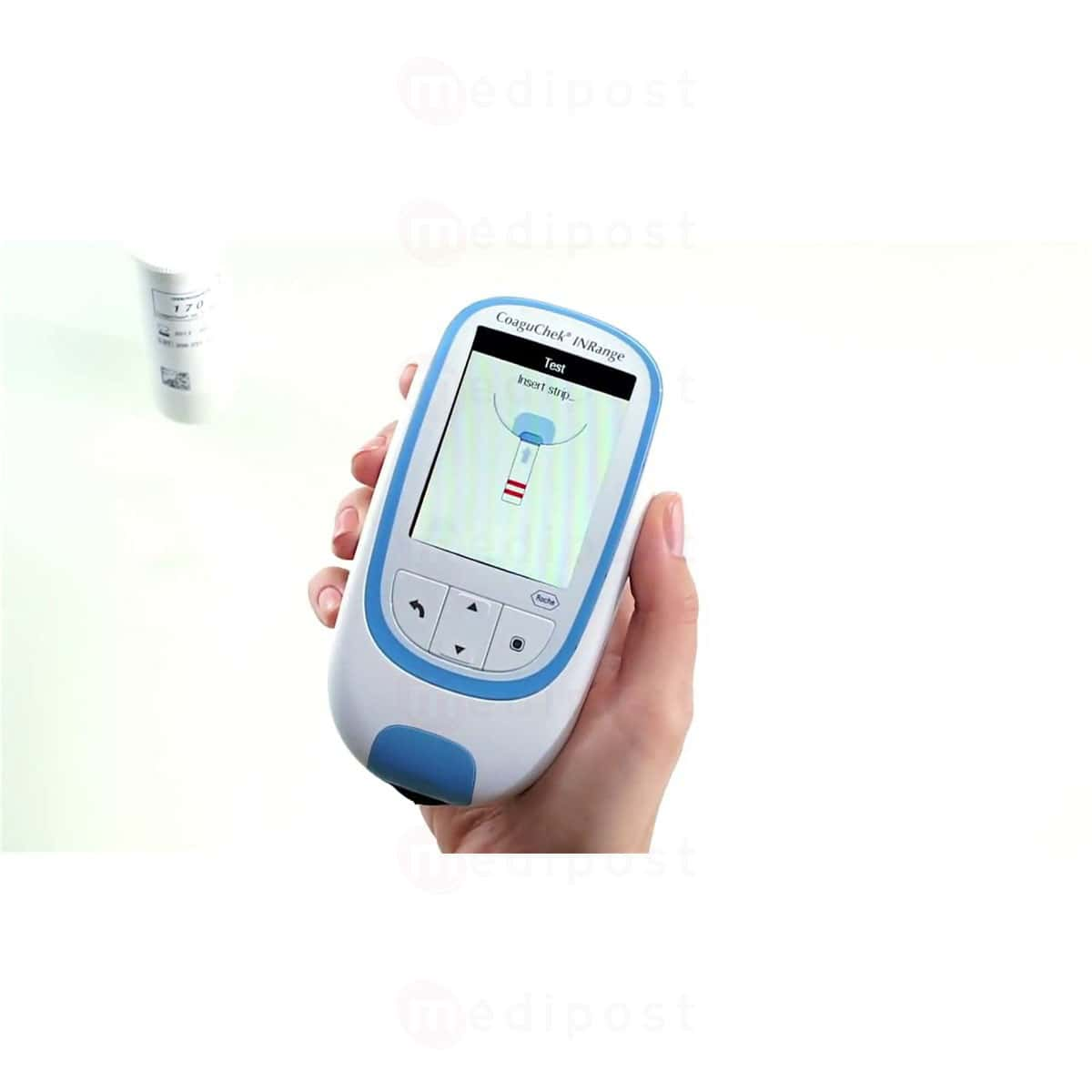
- Insert a test strip into the reader
- Prick the tip of your finger with the lancing device
- Place a drop of blood on the test strip
- Read the result on the screen after approximately 1 minute
Kit contents:
- The CoaguChek(r) INRange kit includes the following items:
- CoaguChek(r) INRange reader
- CoaguChek(r) XS SoftClix lancing device
- 20 CoaguChek(r) SoftClix lancets
- Carrying case
- USB cable
- 4 AAA batteries
- Operator manual
- Quick start guide
What does self-management of your INR involve?
Self-management of your INR involves regularly monitoring and controlling your prothrombin time (also called INR) in your blood independently, without the help of a healthcare professional. This can be done using a home prothrombin time measurement device such as the Coaguchek INrange, which is easy to use and can provide results quickly. Self-management of your INR is generally recommended for people taking anticoagulant medications to prevent blood clot formation. It can help maintain a stable prothrombin time within recommended limits, which can reduce the risk of complications.
Why is it important to monitor your prothrombin time?
It is important to regularly monitor your prothrombin time (also called INR) because it can help prevent complications related to blood coagulation. Prothrombin time measures how long it takes your blood to clot, and a high level can increase the risk of blood clots. If you are taking anticoagulant medications, such as warfarin, it is important to regularly monitor your prothrombin time to ensure it is within recommended limits. This can help prevent complications such as strokes and pulmonary embolisms.
What factors can affect your prothrombin time?
There are several factors that can affect prothrombin time in the blood. First, certain medications can increase or decrease prothrombin time. For example, anticoagulant medications, such as warfarin, can increase prothrombin time by preventing blood coagulation, while certain non-steroidal anti-inflammatory drugs (NSAIDs), such as ibuprofen, can decrease prothrombin time by inhibiting the production of coagulation factors. Additionally, certain medical conditions, such as liver failure or vitamin K deficiency, can also affect prothrombin time. Finally, changes in diet, such as excessive vitamin K consumption, can also affect prothrombin time.
What is a good INR?
A good prothrombin time generally falls between 2 and 3. This means that your blood's clotting time is within recommended limits and the risk of blood clots is low. A prothrombin time below 2 can increase the risk of bleeding, while a level above 3 can increase the risk of blood clots. It is important to work with a healthcare professional to determine what is the right prothrombin time for you, taking into account your general state of health and any medications you are taking.