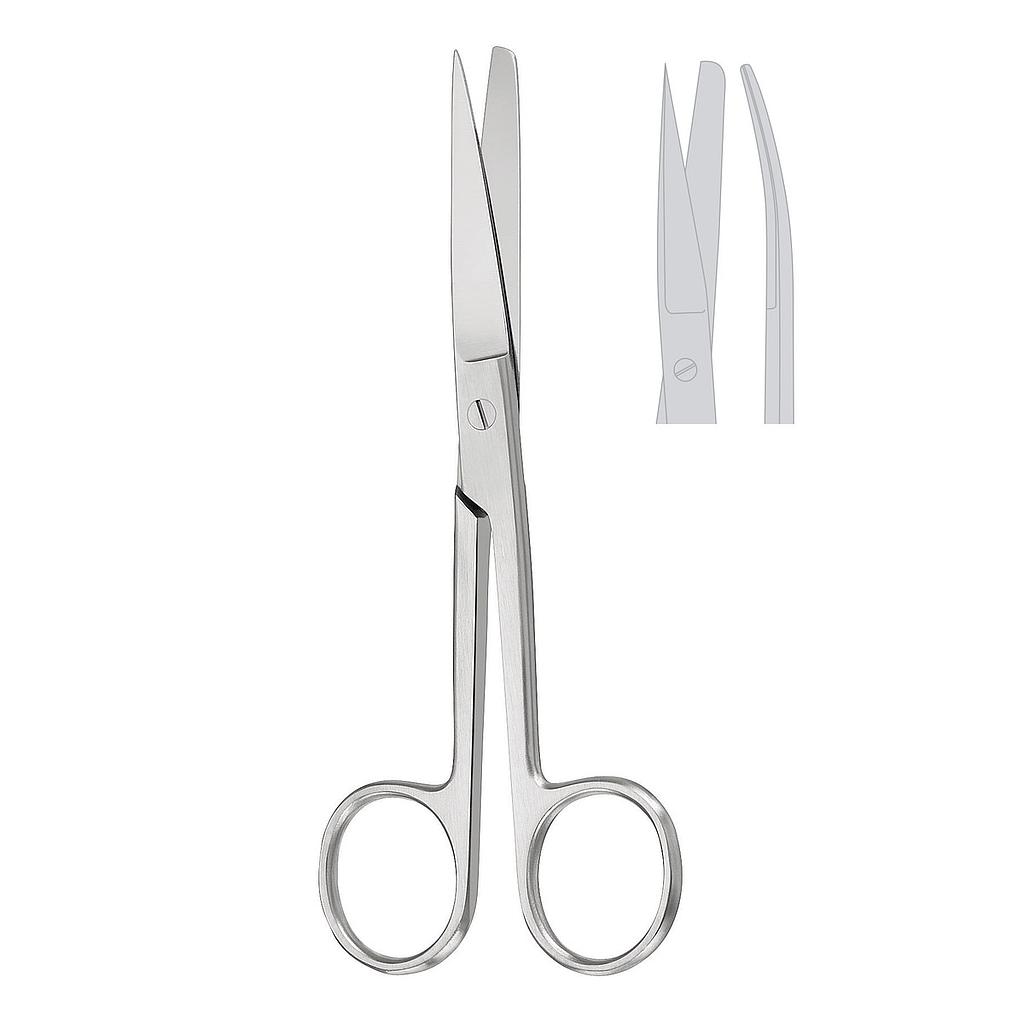
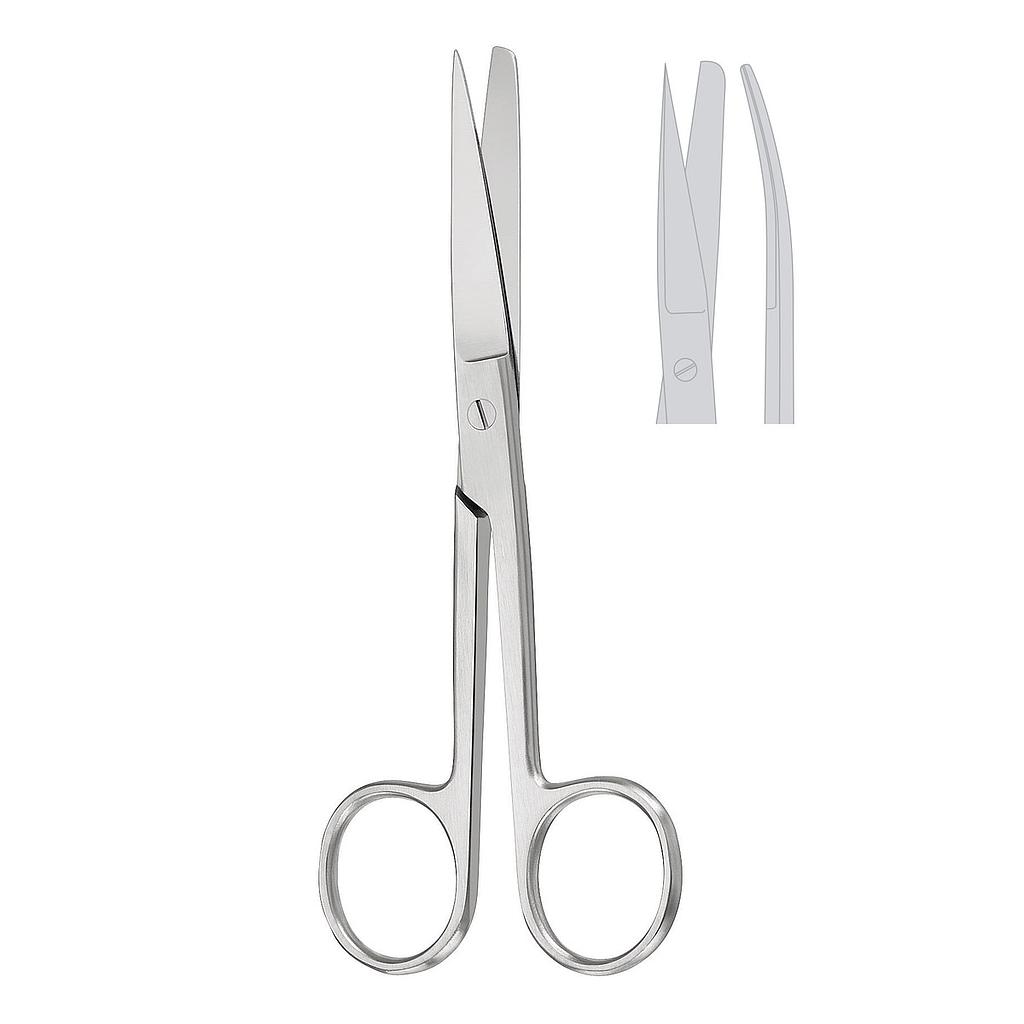
Curved surgical scissors, sharp-blunt
Curved 14 cm surgical scissors with mixed tips (sharp/blunt), ideal for procedures requiring precision and safety. Made in Germany, these superior stainless steel instruments with polished finish guarantee durability and resistance. Fully sterilizable for use in medical and surgical environments.
| Brand: Dimeda |
Référence |
08.111.14 |
Associated categories: Scissors > Surgical scissors > Curved surgical scissors, sharp-blunt
Features
- Curved surgical scissors with 14 cm blades
- Combination of sharp point and blunt point for precise and safe cutting
- German manufacturing
- Superior quality stainless steel
- Polished steel finish
- Sterilizable instrument
- Total length: 14 cm
- Blade curvature adapted for procedures requiring angled access
German precision in service of everyday surgical technique.
Frequently asked questions
What is the difference between sharp-blunt scissors and sharp-sharp scissors?
Sharp-blunt scissors have one blade with a sharp tip and one blade with a rounded tip. This configuration allows the blunt tip to glide under tissues without risk of accidental perforation, while the sharp tip ensures clean cutting.
How do I sterilize these surgical scissors?
These stainless steel scissors are compatible with standard autoclave sterilization methods. Be sure to clean them thoroughly before sterilization and dry them properly after the cycle to preserve their quality.
Why choose curved blade scissors rather than straight ones?
Curved blades offer better visibility of the surgical field and facilitate access to difficult-to-reach areas. They also allow you to follow natural anatomical contours when dissecting tissues.