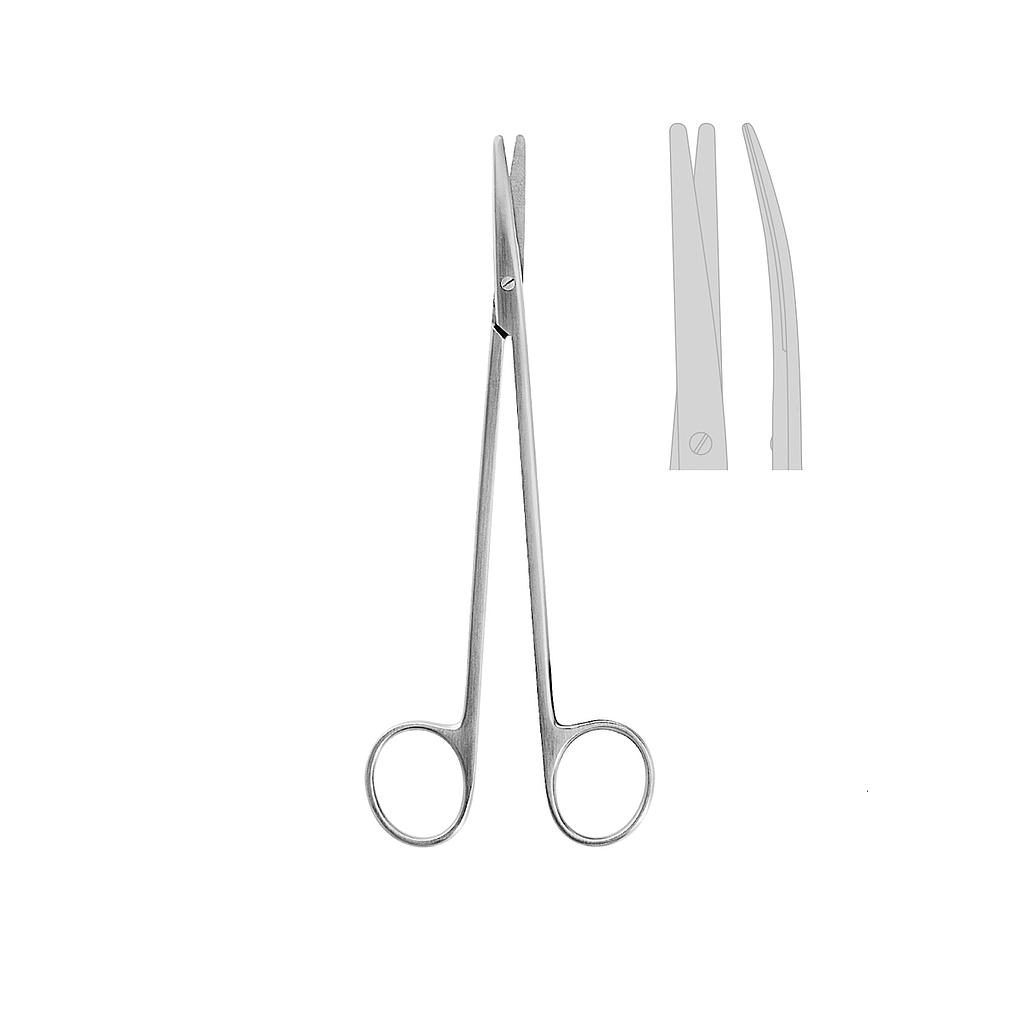
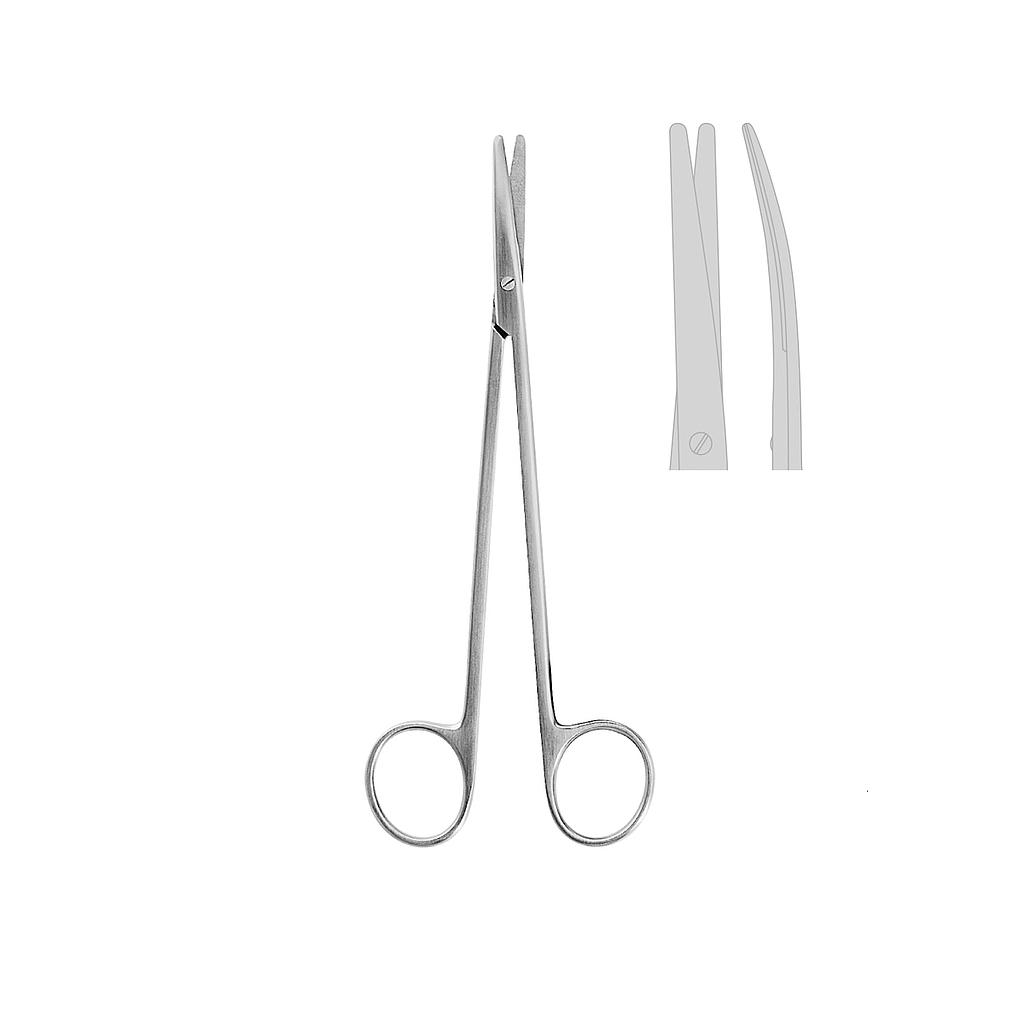

Metzenbaum dissecting scissors curved with blunt tips
Metzenbaum curved dissection scissors with blunt tips are precision instruments designed for fine dissection and cutting of delicate tissues. Made in superior stainless steel with polished finish, these sterilizable scissors are available in several lengths (15 to 30 cm). An essential instrument for demanding healthcare professionals.
| Brand: Dimeda |

Référence |
08.281.15 |
Associated categories: Scissors > Dissection scissors > Curved Metzenbaum dissection scissors with blunt tips
Characteristics:
- Curved Metzenbaum dissection scissors with blunt tips
- Specifically designed for fine dissection and cutting of delicate tissues
- Curved blades facilitating access to difficult areas
- Blunt tips (rounded) reducing the risk of accidental perforation
- Available length: 15 to 30 cm depending on models
- German manufacturing guaranteeing precision and durability
- Superior stainless steel
- Polished finish for optimal handling
- Sterile and reusable instrument
- Also known as Metzenbaum forceps or Metzenbaum-Lahey
- Not recommended for cutting sutures in order to preserve blade sharpness
Often purchased together
The precision of the surgical gesture begins with the choice of an exceptional instrument.
Frequently asked questions
What is the difference between Metzenbaum scissors and Mayo scissors?
Metzenbaum scissors have finer and longer blades, designed for delicate dissection of soft tissues. Mayo scissors have more robust and shorter blades, suitable for cutting thicker tissues such as fascias or sutures.
Can Metzenbaum scissors be used to cut sutures?
This use is not recommended as it quickly dulls the blades and reduces their performance for fine dissection. Spencer scissors are better suited to cutting skin sutures.
How do you maintain Metzenbaum scissors to extend their lifespan?
Clean the scissors immediately after use, rinse thoroughly and dry carefully before sterilisation. Avoid using them to cut materials other than the tissues for which they are designed. Regular lubrication of the joint preserves the fluidity of movement.