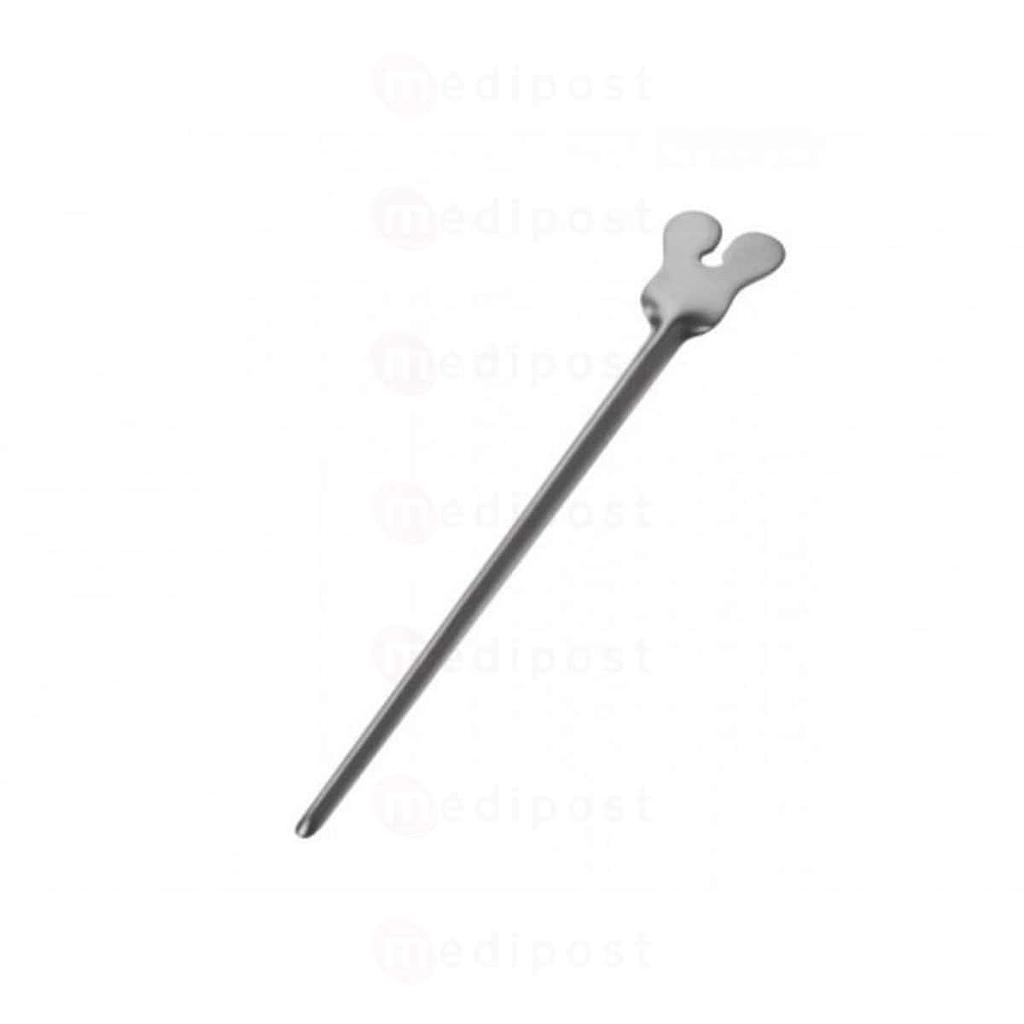
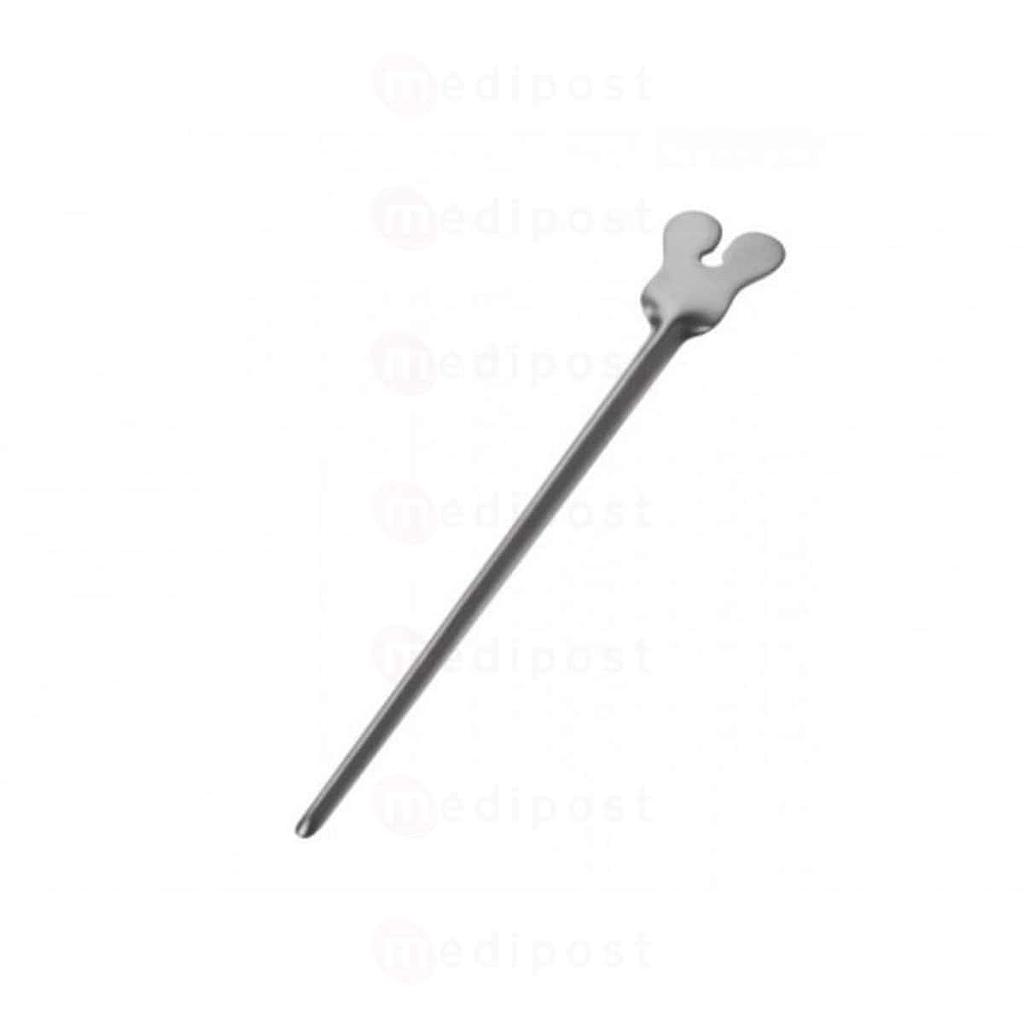
Grooved probe
Grooved stainless steel dissection probe, essential for precision work in laboratory or anatomy room. This 14 cm instrument allows gentle lifting and separation of tissues thanks to its characteristic longitudinal groove. Sold individually, this robust metal probe integrates perfectly into your dissection kit.
Référence |
20.110.13RH1 |
Associated categories: Boxes and containers > Dissection kits Grooved probe
Features:
- Stainless steel grooved dissection probe
- Length: 14 cm
- Longitudinal groove to guide a scalpel blade
- Blunt end to protect underlying tissues
- Corrosion-resistant stainless steel
- Reusable instrument after sterilization
- Non-sterile upon delivery
- Sold individually
Often bought together
The essential instrument for precise and safe dissections.
Frequently asked questions
What is a grooved probe used for in dissection?
The grooved probe guides a scalpel blade along its groove during tissue incision. It protects anatomical structures underneath thanks to its blunt end, thus preventing accidental injuries.
How to sterilize a stainless steel grooved probe?
The stainless steel grooved probe can be sterilized in a steam autoclave according to standard protocols. It is recommended to clean it thoroughly before sterilization to remove any organic residue.
What is the difference between a grooved probe and a button-end probe?
The grooved probe has a longitudinal groove intended to guide a sharp instrument. The button-end probe, on the other hand, features a rounded end shaped like a button, used mainly to explore cavities or fistulous tracts.