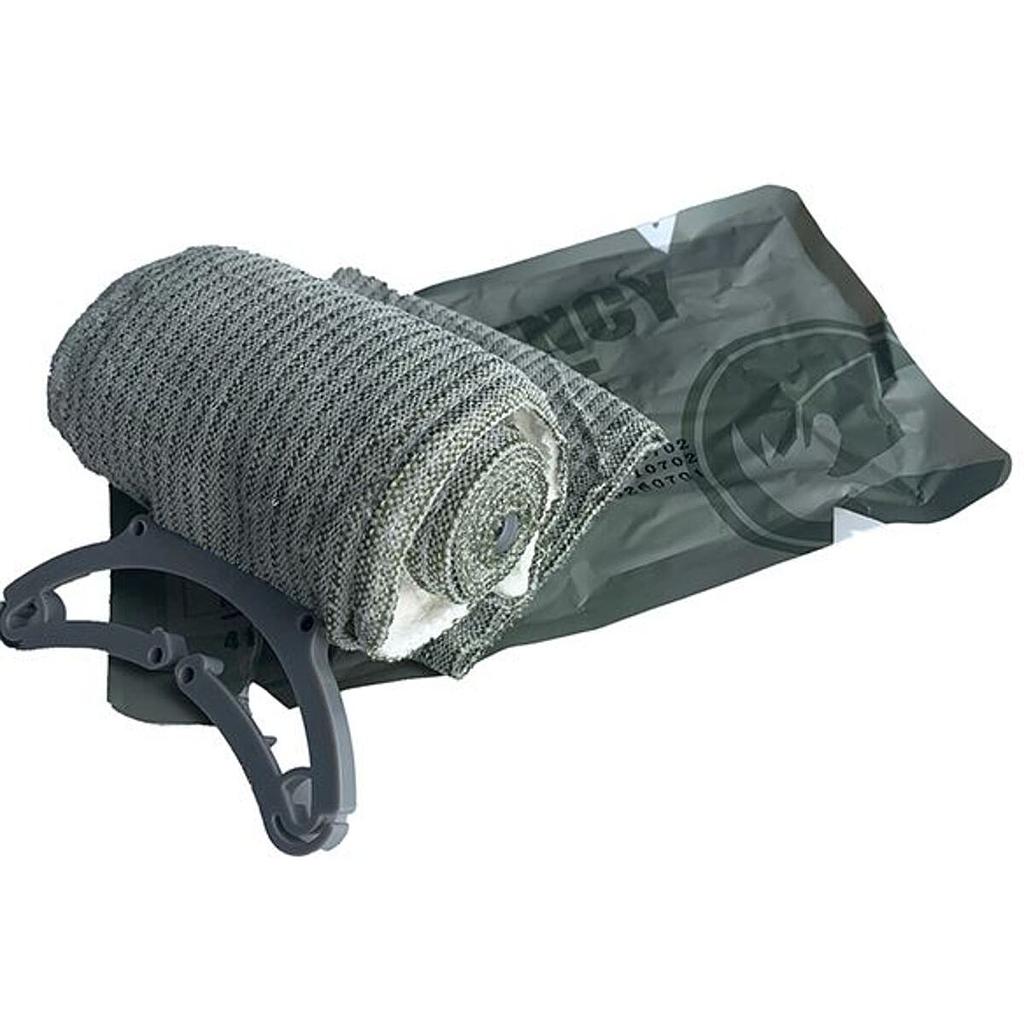
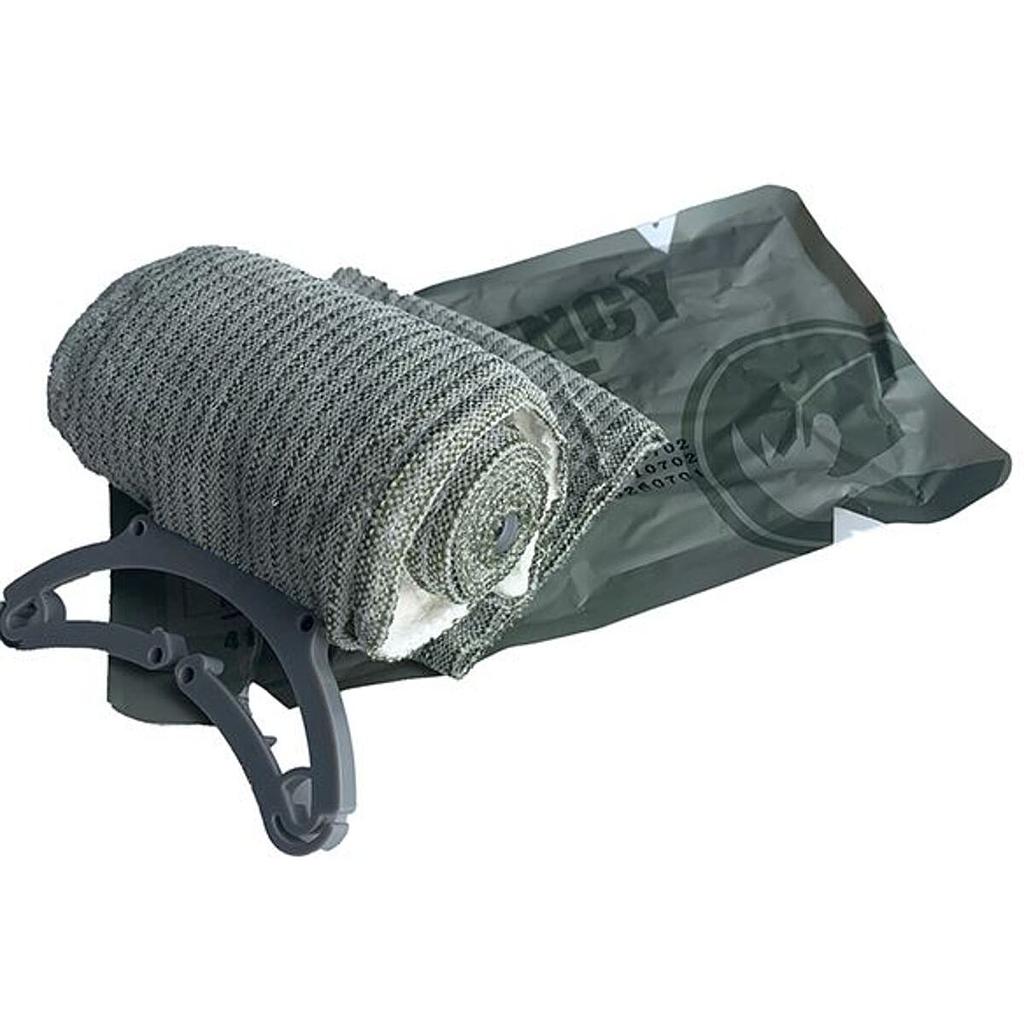
Israeli-type emergency bandage
The Israeli emergency bandage is a sterile compression dressing designed to control massive hemorrhages and severe trauma. Its integrated tightening ring and unique grip system allow autonomous single-handed application on any part of the body. Used by military personnel, firefighters and professional rescue workers.
Référence |
210821 |
Associated categories: Medical bands and bandages > Medical compression bands > "Israeli" type emergency bandage
Features:
- Sterile emergency compression bandage "Israeli" type
- Designed for single-handed self-application without assistance
- Integrated pressure applicator for effective and controlled compression
- Non-adherent compress 18 x 10 cm
- Elastic band 10 cm x 2.5 m (expandable to 4 m)
- Unique grip system for precise holding and guidance
- Double vacuum packaging guaranteeing sterility
- Ensures hemostasis through direct compression
- Applicable to all body areas
- Used by armed forces, firefighters, rescue workers and hospital services
- Indicated for massive hemorrhages and severe trauma
- Functions as a sterile secondary dressing
Often bought together
When every second counts, one gesture is enough to regain control.
Frequently asked questions
How to apply an Israeli bandage alone with one hand?
Place the compress directly on the wound, pass the band through the pressure applicator, then pull firmly to compress. Then wrap the band around the limb and secure it using the integrated holding system.
What is the difference between an Israeli bandage and a standard compression dressing?
The Israeli bandage incorporates a pressure applicator that allows targeted and constant pressure to be applied to the wound. This design facilitates self-application and provides more effective compression than a standard elastic bandage.
In what situations should an emergency compression bandage be used?
This type of bandage is intended for severe hemorrhages caused by deep wounds, trauma or gunshot injuries. It is part of first aid equipment for situations where rapid bleeding control is vital.