
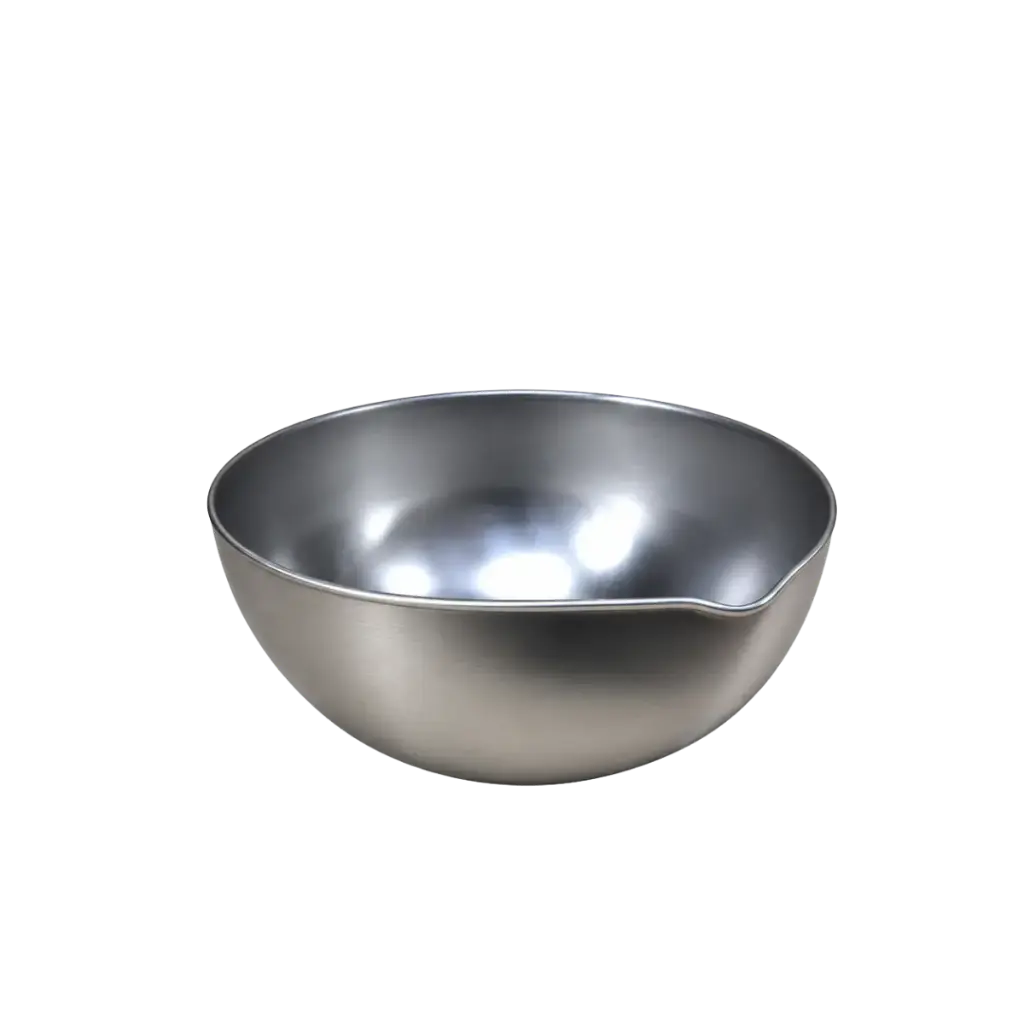


Stainless steel gallipot with handles and pouring spout flat bottom
AISI 304 stainless steel cup with flat bottom, equipped with lateral handles and a pouring spout for safe handling and precise transfer. Made by cold forming, without welding, it offers optimal corrosion resistance. Satin finish facilitating maintenance. Available from 250 ml to 4.5 L, ideal for operating theatres and treatment rooms.
Référence |
AG310A |
Associated categories: Boxes and containers > Bowls > Stainless steel bowl with handles and pouring spout with flat bottom
Features
- Medical bowl in stainless steel with flat bottom, pouring spout and side handles
- AISI 304 stainless steel: high resistance to corrosion and disinfectants
- Cold deformation manufacturing: seamless monolithic structure for optimal hygiene
- Flat bottom: perfect stability on all work surfaces
- Integrated pouring spout: precise liquid transfer without splashing
- Two side handles: secure grip, even with gloves
- Satin finish inside and outside: easier cleaning, minimal marks
- Autoclave sterilization compatible
- 5 capacities available depending on needs:
- Ref. 310A – 0.250 L – Ø100 mm
- Ref. 312A – 0.500 L – Ø120 mm
- Ref. 316A – 1 L – Ø160 mm
- Ref. 320A – 2 L – Ø200 mm
- Ref. 325A – 4.5 L – Ø250 mm
- Use: operating room, treatment room, sterilization service, specimen collection
- Allows placement of surgical instruments, compresses or antiseptic solutions
Trusted equipment in the operating room: stable, resistant and always ready to use.
Frequently asked questions
Can this stainless steel bowl be sterilized in an autoclave?
Yes, AISI 304 stainless steel perfectly withstands autoclave sterilization cycles. The seamless manufacturing also facilitates complete cleaning before each sterilization.
What capacity to choose for an operating room?
For routine procedures requiring placement of instruments or compresses, 1 L or 2 L models are the most versatile. Small capacities (250 ml, 500 ml) are suitable for antiseptic solutions, while the 4.5 L model is suitable for procedures requiring a large volume.
Why prefer a bowl with flat bottom rather than dome bottom?
The flat bottom offers maximum stability on instrument carts and tables, preventing any risk of tipping. This shape also facilitates the retrieval of small instruments placed at the bottom of the bowl.