
Parinaud visual acuity scale with letters - handheld
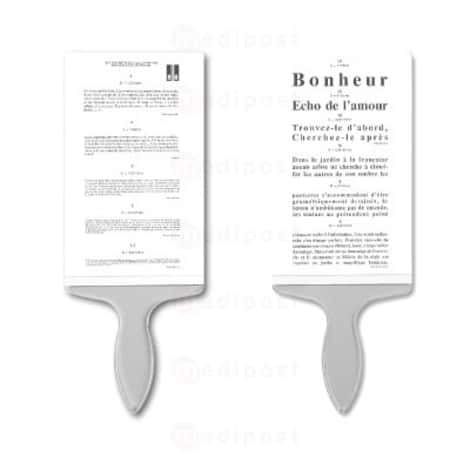
The lettered Parinaud scale measures near visual acuity in adults and children. This CE-certified handheld optometric diagnostic tool features two sides with paragraphs of decreasing size for reading at 30-35 cm. Ideal for visual screening in school, workplace or medical practice settings.
| Brand: Ella Legros |

Référence |
EL-PARINAUD |
Associated categories: Specialist diagnostic equipment > Optometric tests > Parinaud visual acuity handheld chart - lettered
Features
- Parinaud near visual acuity chart for literate subjects
- Designed for measuring near vision in adults and children who can read
- Handheld model, practical and easy to handle for daily use
- Recommended reading distance: 30 to 35 cm
- Double-sided presentation with texts in decreasing font sizes
- Progressively reduced paragraphs for accurate assessment
- Ideal for screening in schools: primary, secondary and high schools
- Suitable for occupational health and workplace examinations
- Common use in medical and ophthalmological practices
- Rigid PVC support, durable and easy to clean
- Transparent plexiglass ergonomic handle
- Dimensions: 34 x 13 cm
- Weight: 202 g
- CE marking
Often bought together
A simple and reliable tool that accompanies me at every consultation to quickly assess my patients' near vision.
Frequently asked questions
At what distance should the Parinaud chart be held when performing the test?
The Parinaud chart should be held at a distance of 30 to 35 cm from the patient's eyes. This standardised distance allows for a reliable and reproducible measurement of near visual acuity.
What is the difference between a Parinaud chart for literate and illiterate users?
The literate version uses texts with decreasing font sizes, requiring the patient to be able to read. Illiterate versions use symbols or recognisable drawings that do not require reading skills.
How do you interpret the results of a Parinaud test?
The result corresponds to the smallest paragraph that the patient can read without difficulty at the prescribed distance. Each text level is numbered and allows the practitioner to assess near vision capacity and detect any possible need for optical correction.