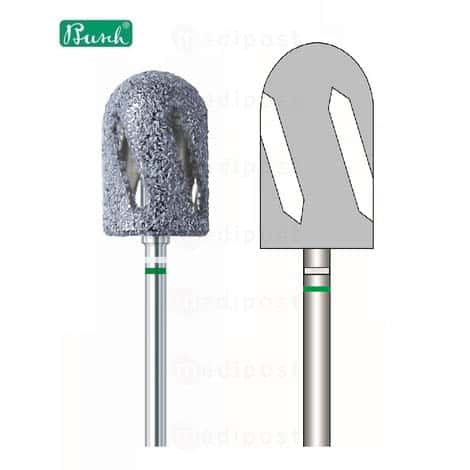
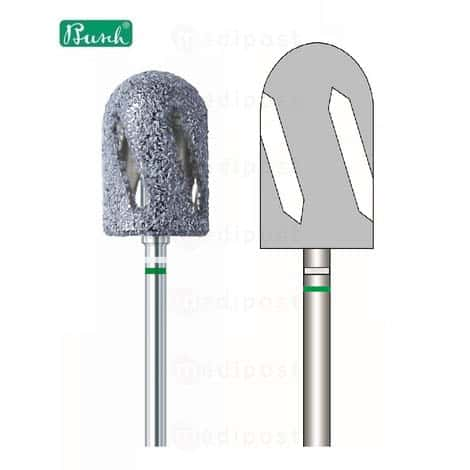
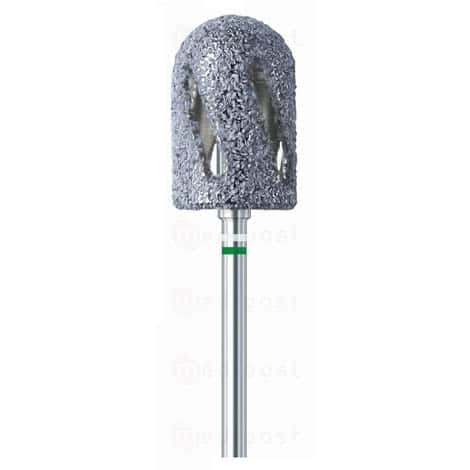
Hybrid Twister bur Ø 10mm - Coarse grain
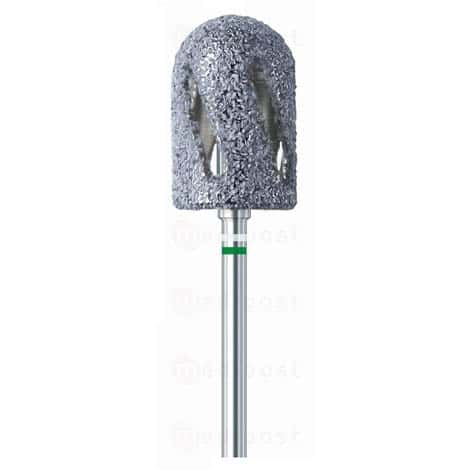
The Hybrid Twister Ø 10mm bur combines diamond and ceramic for a super coarse progressive hybrid grain (300 µm), ideal for abrading hyperkeratosis. Its hollow design with cooling grooves prevents overheating, allowing dry or wet use. Cylindrical shape with rounded tip, manufactured in Germany according to ISO 13485 standards.
| Brand: Busch |

Référence |
HT6880.100 |
Associated categories: Podiatry > Burs > Hybrid Twister Bur Ø 10mm - Coarse grain
Features
- Hollow podiatric Hybrid Twister bur for micromotor
- Patented hybrid technology: diamond grains combined with ceramic
- Extra coarse grain (300 µm) for abrading hyperkeratoses
- Cylindrical shape with rounded end
- Head diameter: 10 mm
- Integrated cooling grooves preventing overheating
- Compatible with dry and wet applications
- Galvanic bonding of diamond grains
- Stainless steel shank
- Colour code: green and white bands
- Maximum permissible speed: 13,000 rpm
- Manufacturer reference: HT6880-100 Busch
- Compliant with standards 93/42/EEC and ISO 13485:2012
- European patent no. 202013006268.1
- Manufactured in Germany
Remarkable working comfort: the bur glides over calluses without ever heating up, my patients feel no discomfort.
Frequently asked questions
What is the difference between a hybrid bur and a standard diamond bur?
The Hybrid Twister bur combines diamond and ceramic grains, creating a progressive grain that wears in a controlled manner. This patented technology provides smoother and more consistent abrasion than traditional diamond burs, while maintaining optimal effectiveness on hyperkeratoses.
Can this bur be used without cooling spray?
Yes, the Hybrid Twister bur is designed to operate dry thanks to its integrated cooling grooves. When used dry, it is recommended to reduce the rotation speed to limit any heat development.
What speed should I set the micromotor to for treating calluses?
The maximum permissible speed is 13,000 rpm. In practice, the speed should be adapted to each patient and the thickness of the hyperkeratosis. For dry work, favour lower speeds to ensure patient comfort.