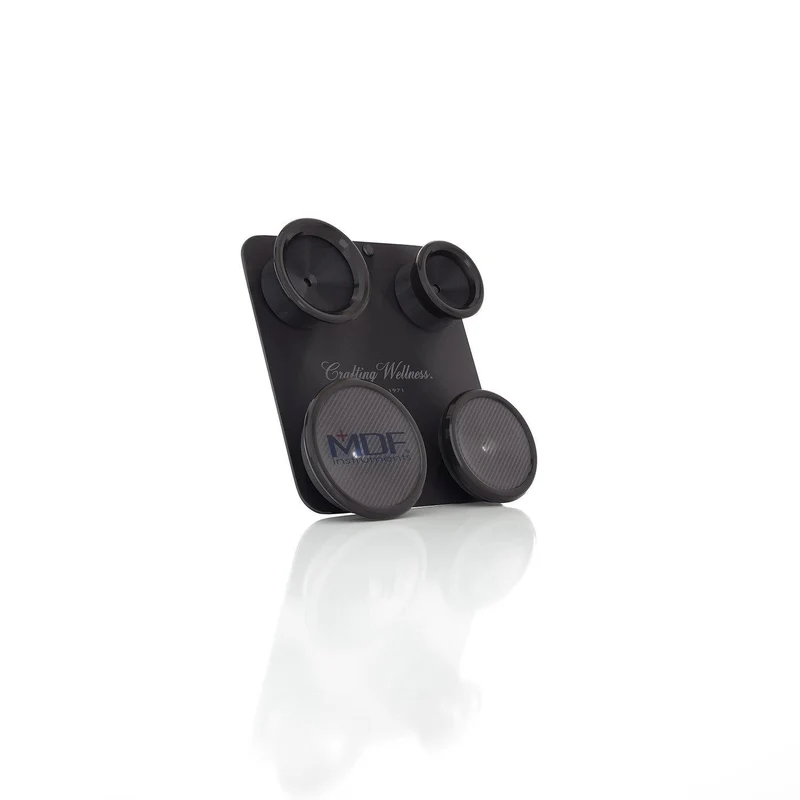


Pediatric & Neonatal Diaphragm for MDF Procardial Stethoscope - Blackout
Transform your MDF ProCardial® Titanium stethoscope into a complete pediatric instrument with this bell and diaphragm head designed for newborns and young children. Its genuine bell captures low frequencies while the diaphragm detects high frequencies, offering precise auscultation adapted to small patients. Quick installation and elegant Blackout finish.
| Brand: MDF® |

Référence |
2700490T-170 |
Tags |
Associated categories: General medical diagnostic equipment > Stethoscopes > Pediatric & neonatal diaphragm for MDF Procardial stethoscope - Blackout
Features
- Pediatric and neonatal diaphragm for MDF ProCardial® Titanium stethoscope
- Blackout finish: full matte black coating
- Dual function: interchangeable bell and diaphragm
- Bell dedicated to auscultation of low frequencies in infants
- Diaphragm optimized for capturing high frequencies
- Diameter adapted to the morphology of pediatric and neonatal patients
- Exclusive compatibility with MDF ProCardial® Titanium stethoscope
- Quick and secure attachment system on the existing adult diaphragm
- Converts an adult stethoscope into pediatric/neonatal configuration
- Complementary accessory for versatile clinical practice
- MDF Instruments manufacturing
One stethoscope to support every patient, from newborn to adult.
Frequently asked questions
Is this pediatric diaphragm compatible with all MDF stethoscopes?
No, this accessory is designed exclusively for the MDF ProCardial® Titanium stethoscope. It cannot be used with other MDF range models or stethoscopes from other brands.
What is the difference between the bell and diaphragm on this diaphragm?
The bell is specifically designed to capture low-frequency sounds, useful for detecting certain heart murmurs. The diaphragm allows auscultation of high-frequency sounds, such as respiratory noise. Both sides are interchangeable depending on examination needs.
From what age can this pediatric diaphragm be used?
This diaphragm is suited for auscultation of newborns (neonatology) through young children. Its reduced diameter allows optimal contact with the skin of small-frame patients, ensuring precise acoustic transmission.