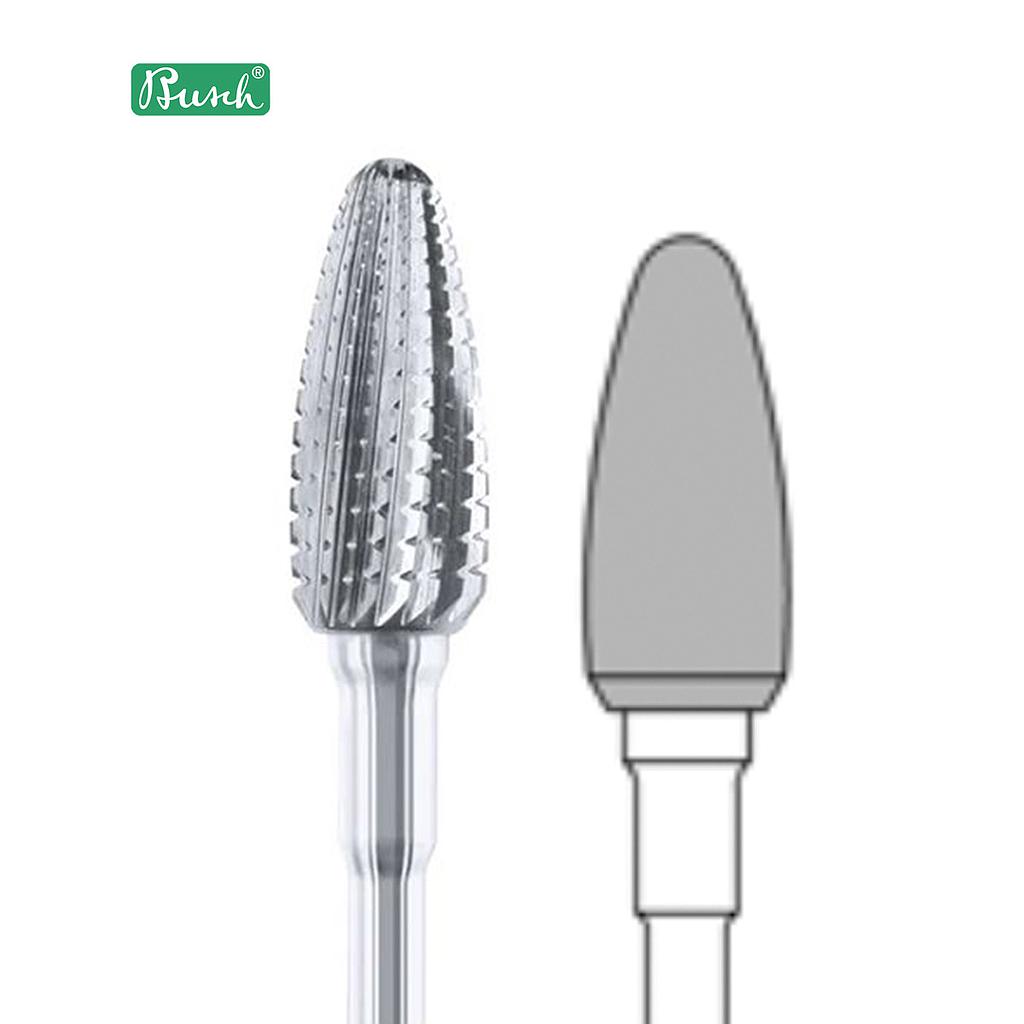
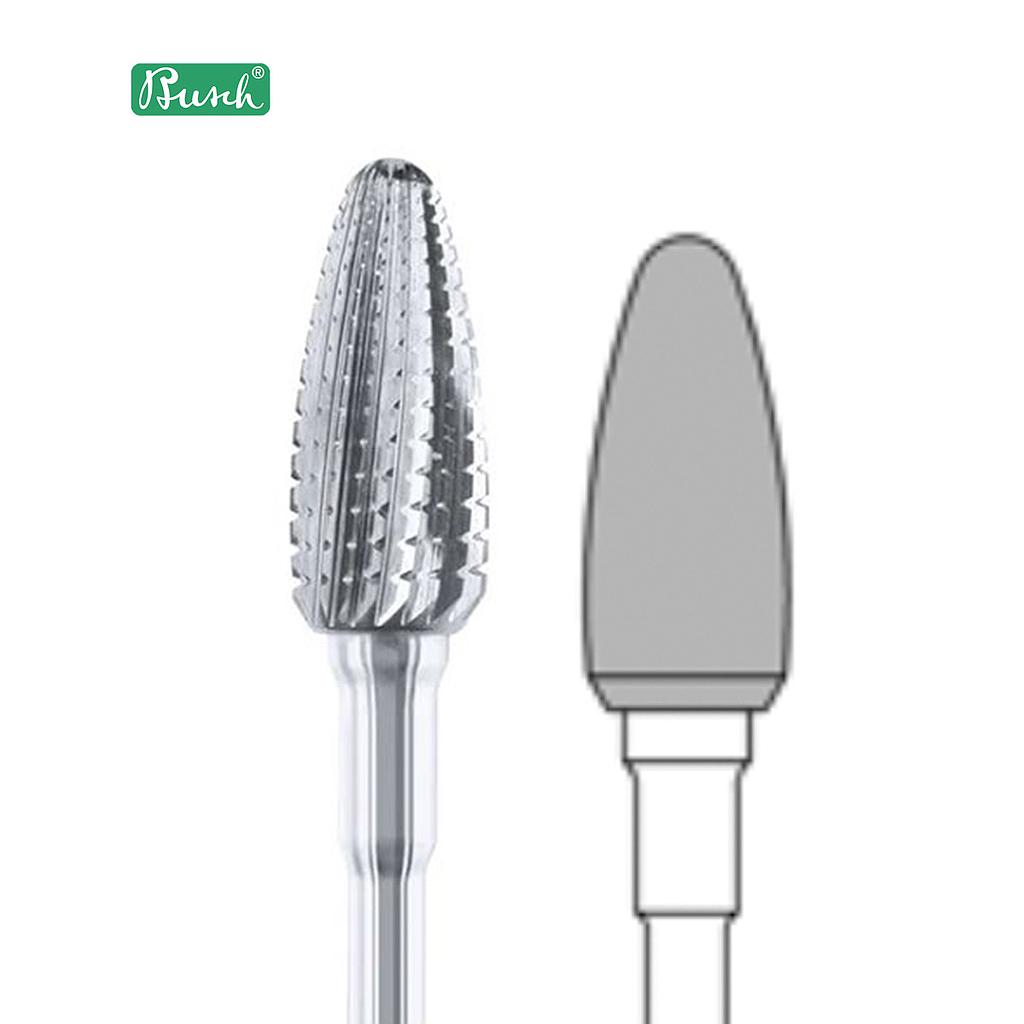
Carbide Bur - Cone ø6mm - Medium Flute (MQS)
Conical carbide bur Ø6mm with medium flute MQS, ideal for precise abrasion and adjustment in pedicure. Designed in tungsten carbide, it effectively treats onychogryphosis, hyperkeratosis and allows resin work for orthoses. Compatible with acrylic, gel and natural nail. German manufacturing certified according to ISO 13485 standards.
| Brand: Busch |

Référence |
425MQS.060 |
Associated categories: Podiatry > Burs > Carbide bur - conical ø6mm - medium grit (MQS)
Features:
- Conical tungsten carbide bur for podiatry micromotor
- Diameter: 6 mm at the widest point
- MQS grit: medium with crosscut for precise and controlled work
- Conical shape: easier access to difficult areas and precision work
- Indications: onychogryphosis, hyperkeratosis, orthosis resin
- Compatible with acrylic, gel and natural nail
- Recommended rotation speed: 10,000 to 25,000 rpm
- Compliant with standards 93/42/EEC and ISO 13485:2012
- German manufacturing
An essential precision tool for daily work in a podiatry practice.
Frequently asked questions
What is the difference between MQS grit and fine or coarse grit?
MQS grit (medium with crosscut) offers a compromise between abrasive efficiency and work fineness. It allows controlled material removal while limiting heat buildup, unlike coarser grit which is more aggressive or fine grit intended for finishing work.
Is this conical bur suitable for working on ingrown nails?
This bur is specifically designed for onychogryphosis and hyperkeratosis. For ingrown nails, other instruments such as cylindrical burs or grooved probes are generally more suitable depending on the technique used.
How to maintain a tungsten carbide bur?
After each use, remove residue using a brass brush. Then proceed with disinfection and sterilization according to current protocols. Avoid impacts that could damage the cutting edges of the carbide.